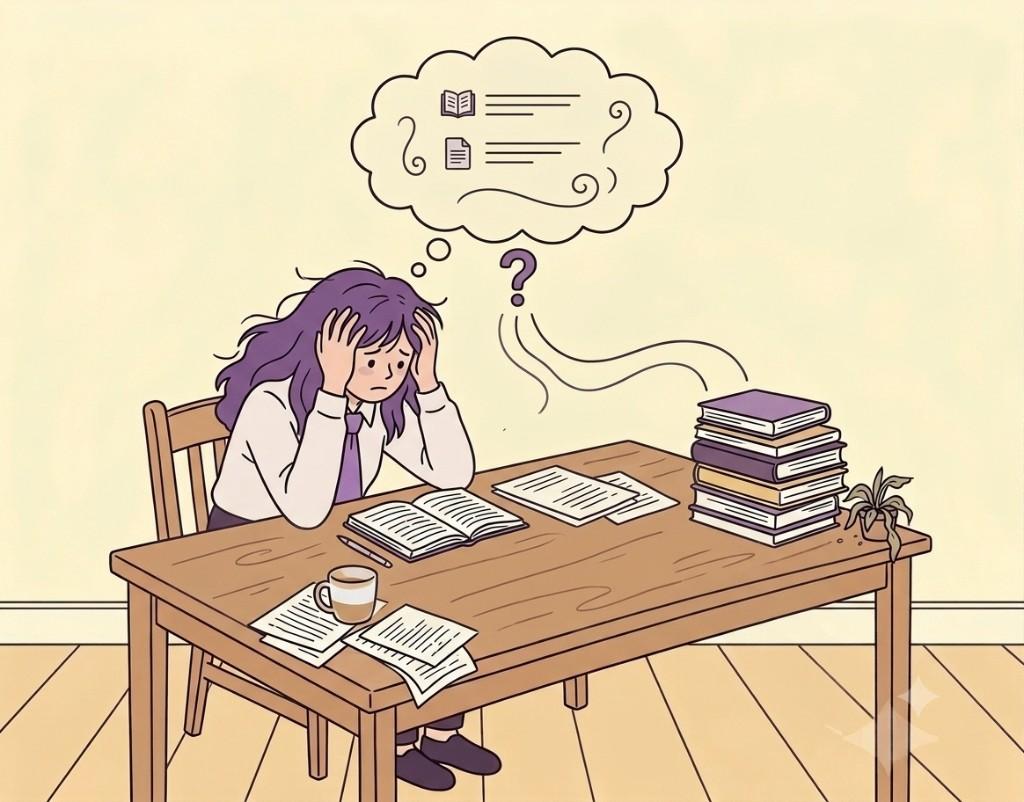
Somewhere along the way, procrastination got mislabeled as a laziness problem, which is why most advice about it is useless. "Just start" isn't a strategy, it's the thing you were already trying and failing to do — telling someone stuck at the starting line to "just run" doesn't move them any closer to the finish.
Research on procrastination backs this up pretty clearly: it's largely an emotional regulation issue, not a time management one. You're not avoiding the task because you don't value it. You're avoiding the feeling the task brings up — overwhelm, boredom, fear of doing it wrong — and the avoidance is your brain's short-term fix for a feeling it doesn't want to sit with. It works instantly and costs you later, which is exactly why it's so hard to talk yourself out of in the moment.
Why a messy task list makes it worse
A disorganized layout doesn't just look unpleasant — it actively raises the emotional cost of starting. If opening your task manager means seeing thirty overdue items, an inbox in chaos, and no clear sense of what matters right now, you've made the very first step (just opening the app) something to avoid, before you've even gotten to the task itself.
This is the part that's easy to miss: sometimes the fix for procrastination isn't more discipline. It's removing the fifteen small frictions standing between you and the one thing you're actually supposed to start.
Lowering the emotional cost of starting
Let something else make the first decision for you. GoMind AI's AI Auto-Prioritization can surface what to tackle first, so you're not opening a blank list and immediately facing the most overwhelming decision of the day — what matters most.
Switch to Manual Mode when noise itself is the problem. Some days the fix isn't more suggestions, it's fewer — a clean, quiet view with nothing but the one task in front of you.
Break it down before you start, not while you're stuck. Sub-task generation turns an intimidating task into a first step small enough that starting doesn't require summoning courage — it just requires doing the first tiny thing.
Log the avoidance itself. Mood tracking that sits next to your tasks can help you notice the pattern — which kinds of tasks you consistently avoid, and often, what feeling is actually driving it.
A few things that genuinely help in the moment
Do the two-minute version, not the whole thing. Open the document. Write one sentence. Momentum almost always follows starting; it almost never precedes it.
Name the feeling, not the task. "I'm avoiding this because it feels overwhelming" is more useful than "I need to stop procrastinating" — one points at a fixable cause, the other is just judgment.
Lower the bar until you can clear it. If the task as written feels impossible to start, it's too big. Shrink it until it isn't.
Forgive the last delay before starting the next task. Guilt about yesterday's avoidance is just more friction sitting on top of today's task.
Procrastination isn't a discipline gap. It's usually a signal that a task feels bigger, scarier, or messier than it needs to be — and the fix is almost always to shrink the task, not to find more willpower you don't currently have.